Thursday, 11 July 2013

Umbrella by Will Self

First Published: 2012 by Bloomsbury (London)
Date Started: 27th June 2013
Date Finished: 8th July 2013
Genre: Historical Fiction
Read For: Casual
----------------------------------------------------------------------------------------------------------------
Audrey Death suffers from Encephalitis Lethargica, an illness from the end of World War I, and has since been in a coma at Friern Hospital in London. In  1971, maverick psychiatrist Dr Zack Busner arrives. In his attempts to bring her back to life, he will have memories that will haunt him for the rest of his life.

Umbrella opens up with a quote by James Joyce, 'A brother is as easily forgotten as an umbrella', and when reading the book, it's understandable as to why Will Self used it. It may seem strange to think that 'a brother is as easily forgotten as an umbrella', but upon reading this  it seems true, although strange to imagine.


Written in a contemporary form and displaying traits of modernism, the book can be a bit of a challenge to read. The protagonist can switch at any moment, there is hardly any paragraphs which make it look clunky, and there are no chapters whatsoever. Yet the way it's written blends well with the story. It's almost as if the reader is shifting in and out of consciousness between the protagonists, like Audrey herself does with her past life and her present life in the hospital.

 Umbrella was a nominee of the Man Booker Prize 2012. Although it's not a light read it's a book that should be read. It's difficult to get into it at first, and the constant switching of protagonists can be confusing at times, but if you want to read a good book, this is one that I can recommend that you should read.


Saturday, 22 June 2013

Before I Go To Sleep by S J Watson

First Published: 2012 by Black Swan (London)
Date Started: 16th June 2013
Date Finished: 18th June 2013
Genre: Crime/Thriller
Read For: Casual
----------------------------------------------------------------------------------------------------------------
Memory is something Christine Lucas hasn't got. Every time she wakes up, she has no memory of her present life. She has to trust the man she is in the same bed with each time she wakes up, who claims to be her husband, Ben.
This thrilling story follows Christine in her attempt to find out why she has no memory and if she can ever get it back. It's also a story about trust, and when you have no memory who can you really trust?

I absolutely loved reading this book. I like how it is written from her point of view in the present tense and in the past from her diary entries. By reading her diary entries, it allows the reader to see how Christine develops. You get to see how her memory changes and how more and more each day she wants to find out why she has no memory.
Before I Go To Sleep
The theme of trust is really something that helps to keep the reader engaged. I found myself at times changing back and forth with the characters who I could trust. With Christine having little or no memories of characters, it's engaging to find out who is telling the truth and who is lying. Although she does have flashbacks, the diary entries are the only thing Christine can trust, but at times, she doubts herself as to whether she is telling the truth or making stuff up. The only way she can find out is to follow through and hope for the best.

This is one of the books that you just have to keep on reading. I would highly recommend it to anybody who loves a good book.


*A bonus to this book is that there is going to be a film of it directed by Rowan Joffe and will star Nicole Kidman and Colin Firth, which will hopefully be realised sometime in 2014.

Thursday, 20 June 2013

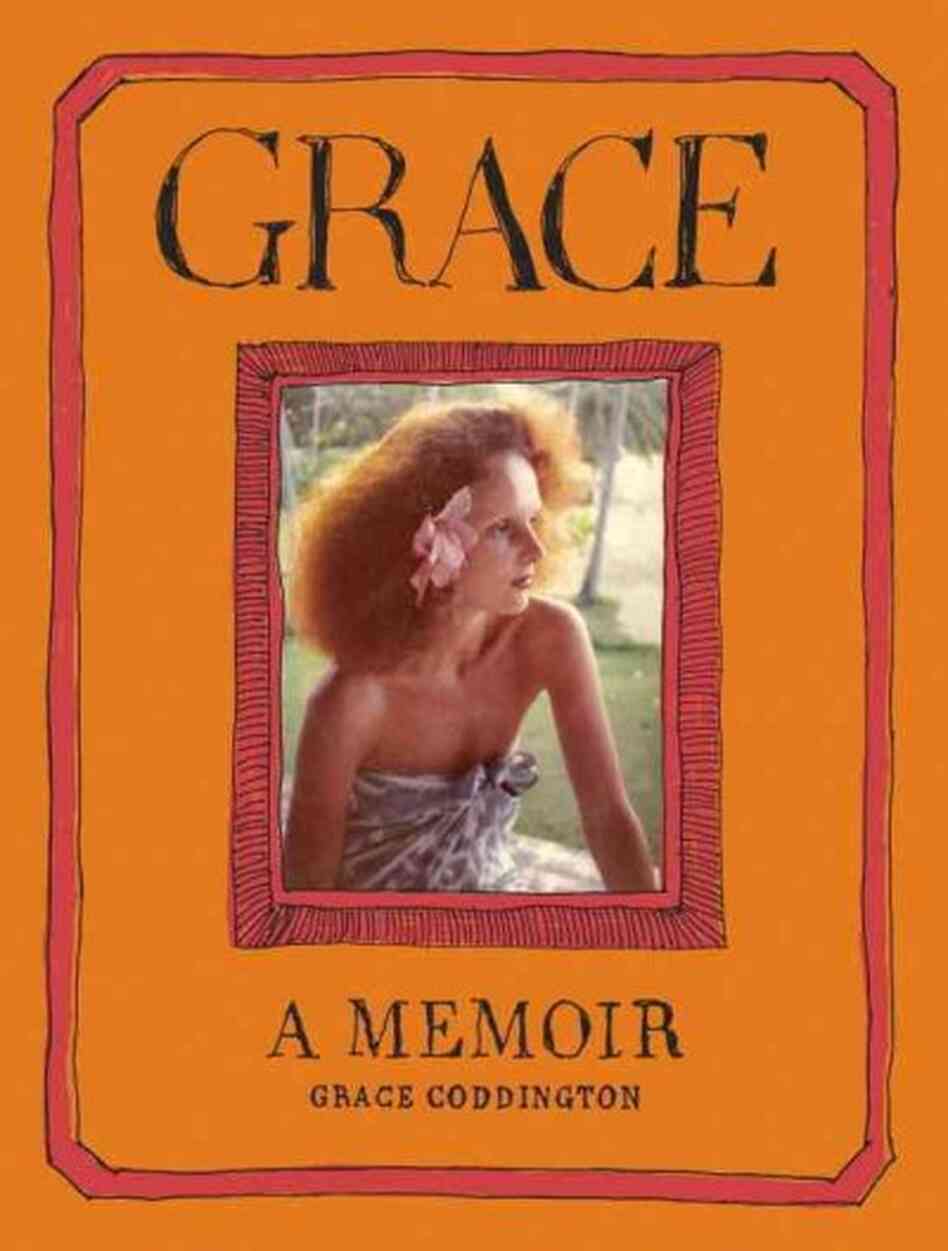
Grace by Grace Coddington

First Published: 2012 by Chatto and Windus (London)
Date Started: 12th June 2013
Date Finished: 16th June 2013
Genre: Autobiography/Memoir
Read For: Casual
----------------------------------------------------------------------------------------------------------------
Grace Coddington has always played a massive part in the making of US Vogue magazine. Putting her all into her creative shoots, she helps to make the magazine what it is. Since the documentary, The September Issue, was realised, Grace has become known all over the fashion world. The documentary showed how Grace could be when working, but this book demonstrates who she really is.
From living in wartime Anglesey to being creative director of Vogue, her book tells the fascinating story of how she made it to where she is today.
Filled with funny stories and her own illustrations, this is a book for all fashion lovers all there.

I have no idea how many times I have watched The September Issue. Before I watched the documentary, I had never heard of Grace. When watching it, I loved what she did. I thought her shoots were amazing to look at as if they were a piece of art. She became someone who I looked up to and aspired to be. When I heard about this book, I knew I had to get it.

One of the great things about the book was that it didn't just talk about her work. She talks about her personal life including friendships, romance, and her family. It all builds up to where she is now. Photographs and illustrations help make the book even more fun to read.

Now that I've read the book, I've learned just how amazing Grace really is. Fashion lover or not, she's someone who can be looked up to. She's a hard-working and passionate woman who stands up for what she believes in.


Tuesday, 28 May 2013

My Life in Books (So Far)

Whilst eating my lunch today, I wanted to watch something on TV. After a bit of channel flicking, I saw a programme on BBC 2 called My Life in Books. I had never heard of it, but the title of it got me hooked on watching it straight away. The programme is hosted by Anne Robinson (who by the way, still does her classic wink face when ending the show, just like in the Weakest Link) and has two well known guests on. The guests sit on one sofa whilst Anne sits opposite them on another. Anne interviews both of them, switching back and forth, asking them to talk about the books they chose for the show with questions like why they chose them, what is there importance to them, and sometimes asking them to read a short extract from one or two of the books they chose.

After watching the show, I began thinking about what my life in books was like. I am only young but books have always played a big part in my life. In a way, this blog post comes in brilliant timing as next Monday is my 19th birthday, and so it allows me to look back on what books have made a mark on me in my life. So here it is, my life in books (so far):

Double Act by Jacqueline Wilson
"Ruby and Garnet are ten-year-old twins. They're identical, and they do EVERYTHING together, especially since their mother died three years earlier - but they couldn't be more different. Bossy, bouncy, funny Ruby loves to take charge, and is desperate to be a famous actress, while quiet, sensitive, academic Garnet loves nothing more than to curl up with one of her favourite books. And when everything around the twins is changing so much, can being a double act work for ever?"
Double Act

Double Act has got to be my favourite book by Jacqueline Wilson. I was a huge fan of her when I was younger and I have to say now that she was probably the author who got me into reading. I did read a lot of her books but this one was the one I remembered liking and reading the most. I also loved, and still do love, Nick Sharratt's illustrations. They're so simplistic in how they are drawn and are so great to look at. Only a few years ago did I realise how she could write about real life issues in a way that children can understand and enjoy reading about. 
Jacqueline, if there ever is a chance that you read this, or if I ever get to meet you, I thank you from the bottom of my heart for getting me into the beautiful hobby that is reading.

War Trash by Ha Jin
""War Trash" is the unforgettable story of Yu Yuan, a young Chinese army officer sent by Mao with a corps of volunteers' to help shore up the Communist side in Korea. When the Americans capture Yu, his command of English propels him into the role of unofficial interpreter in the psychological warfare that defines the POW camp. Desperate to return to his beloved fiancee and widowed mother, Yu is trapped by both barbed wire and politics."
War Trash

This is just one of those books that have been written well and is extremely engaging. I remember that I got this from my local library as I just wanting something to read. I had no idea this existed and I had never really read anything like this before. This was one of those books that as soon as I woke up the next morning, I couldn't wait to continue reading it. When I go to the local library when I'm back home, I try to look for it on the shelves and hope that it's there. I haven't been in a while so maybe when I go there next, I'll try and find it again. By reading this book, it made me understand that trying out books that I don't usually read is a good thing to do as it allows me to be opened up to new experiences.

A Train in Winter: A Story of Resistance, Friendship and Survival by Caroline Moorehead
"On an icy dawn morning in Paris in January 1943, a group of 230 French women resisters were rounded up from the Gestapo detention camps and sent on a train to Auschwitz - the only train, in the four years of German occupation, to take women of the resistance to a death camp.The youngest was a schoolgirl of 15, the eldest a farmer's wife of 68; there were among them teachers, biochemists, sales girls, secretaries, housewives and university lecturers. The women turned to one another, finding solace and strength in friendship and shared experience. They supported and cared for one another, worked together, and faced the horror together. Friendship, almost as much as luck, dictated survival. Forty-nine of them came home. Caroline Moorehead's breathtaking new book is the story of these women - the first time it has been told. It is about who they were, how and why they joined the resistance, how they were captured by the French police and the Gestapo, their journey to Auschwitz and their daily life in the death camps - and about what it was like for the survivors when they returned to France. A Train in Winter covers a harrowing part of our history but is, ultimately, a portrait of ordinary people, of bravery and endurance, and of friendship."
A Train in Winter: A Story of Resistance, Friendship and Survival
I've always loved history. I love reading about it and I loved studying it (I did a GCSE and A Level in it). What I loved about this book was that not only did it tell in detail about the lives of the women before, during, and for those who were lucky, after , it allowed me as a reader to truly understand the value of friendship. The book showed how strong women back then could be and it emphasised how women were during the war, not just letting the men do all the fighting. As a woman, it taught me that I can fight for what I believe in and that it is possible to win. 

I hope you enjoyed reading this. I did only mention 3 books, but as I said, I'm only young. Perhaps I'll do another one of this post sometime ahead in the future. Let me know what your life in books is in the comments below.

Sunday, 19 May 2013

Summer Hols.

Hey all, so sorry that I haven't posted anything in a long time. I've been really busy with uni coursework and sorting out a house for my second year. All my coursework is done now and the housing is more or less done (hopefully), so I should be back to blogging on a regular basis. I'm off for a glorious 4 months so I have loads of time to get some blogging done. I may be getting a job or volunteer work depending if I can find anything, but I hope that it doesn't effect this too much.

Thank you for you patience :)

Wednesday, 10 April 2013

Atonement by Ian McEwan

First Published: 2001 by Johnathan Cape (London)
Date Started: 05th April 2013
Date Finished: 09th April 2013
Genre: Fiction
Read for: Uni/1001 Books
----------------------------------------------------------------------------------------------------------------
During the hottest day in summer in 1935, thirteen-year-old Briony Tallis witnesses something between her sister Cecilia, and childhood friend, Robbie, that ends up changing all of their lives from that day onward. Seeing her sister take off her clothes and go in the fountain, Briony's young imaginative mind ends up later telling all that she thinks is true, but all of them will end up feeling the pain for what she did for the rest of their  lives, and she will spend the rest of her life trying to atone.

The narrator being omniscient of the three main characters and often changing which characters view we are reading about, the story allows the reader to see and understand the lives and the choices each of them made, both in 1935 and in the future during WWII. As the story goes through two time periods, three if you include a further jump ahead of time but with just Briony, as a reader, we can see how over time, how they have developed as people as well as their opinions on that eventful day.
I really liked how Ian McEwan did this. To be able to see how over time the characters grow but still hold on to what happened that day is reflective of people in real life. McEwan held on close to what people in real life are like and that's what made it really interesting. Although the characters are fictional, they seemed like they could be real people and that made it gripping to read.

When reading the book, I felt like I was there. I could understand how and why all the characters acted the way that they did. I think when it comes to setting a novel that is in the past, in this case the twentieth century, as a writer, you have to make sure that you get all the facts right. It isn't just what was there and what wasn't, but also how people were back then. People like myself who were born in the later part of the twentieth century won't entirely act like those who were born in the earlier part of the twentieth century.

As the book covers several years, we learn how relationships can change, for better or for worse. McEwan not only includes the one between the three main characters, but also the ones with other family members. That day in 1935 does have an effect on some of the relationships, however, time itself and the way that life is demonstrates how relationships develop.
Romantic love for someone shows how far you're willing to go to be with them. For Cecilia, it means never speaking to her family again. Love is one of the themes that is covered in the book, and for the relationship between Cecilia and Robbie, it's that what keeps them going when they are not with each other, especially during the war when Robbie is out fighting with the army.
The emotions Briony goes through for the majority of the book shows that she is sorry for what she did and she wants to try and change what happened, even if part of her knows that it will probably not make much difference.
Relationships overall are dealt with really well and that makes the book a great read. It's a fictional story but with characters who could easily be people in real life.

Knowing how big of an author Ian McEwan is, I had been wanting to read some of his work and I now can see why he is a successful author. Atonement was an enjoyable read and I will definitely be reading more of his books. I'm wanting to now watch the film too, to see what it is like compared to the book. Hopefully it will be just as good.


Thursday, 4 April 2013

Life of Pi by Yann Martel

First Published: 2002 by Cannongate Books Ltd (Edinburgh)
Date Started: 30th March 2013
Date Finished: 04th April 2013
Genre: Adventure
Read for: Casual/1001 Books
----------------------------------------------------------------------------------------------------------------
Life of Pi tells the extraordinary story of young Piscine Molitor Patel (Pi) who is on the way to Canada with his family to start a new life, along with some of the animals in his father's zoo. When they are on the ship there, a sudden turn of events leads to Pi being stranded on a life boat in the Pacific Ocean. However, he is not alone. He is not with his family though, or any other people for that matter. In fact, he is with some of the animals who were on board the ship with him, including a Royal Bengal Tiger by the name of Richard Parker.

I loved reading about such a strange yet exciting adventure. At times I got so hooked reading it, I just needed to know what happened next. Before Pi ends up in the Pacific Ocean, Pi tells us about his upbringing, including his knowledge of zoology, both from studying it academically and living in a zoo. With this in mind, I was curious as to how Pi would use this in order to survive on the boat with Richard Parker and any of the other animals. The book is written in a way that as a reader, we can learn and understand the facts of animals and the choices Pi makes, and not be confused about it (I don't know about you, but I'm not a zoologist).
The animals in the story, especially Richard Parker, have been written to have their own characteristics. Although they are animals, I believed they were like their own people. Each animal is different in its own way, and it helps give a better element to the story in portraying Pi's adventure.

Religion is a theme that runs throughout the book and is very important to Pi. Being a Christian, Muslim, and Hindu, Pi is a character who is a big believer of faith and religion. He partakes in religious beliefs and acts, like praying, for all three religions, before and when on the life boat. At the beginning of the book, it does go on for a bit about Pi trying out all three religions and I did sometimes get bored by this. It wasn't till later on in the book that I realised how important this was, but at the beginning, it did seem to me that it could drag on a bit too much.

Clearly Yann Martel has done his research when it comes to showing how a person would survive in conditions like Pi is faced in. Martel made the decisions that Pi made seem like realistic choices that a person in real life in those same conditions would do. He made it fun to read and the more I read the book, the more closer I got to Pi. I could really understand his choices which reflected both his characteristics and the effects of being in the conditions that he was living with.

I won't reveal too much about the ending, but it was a surprise to me. It was a great twist to the story and makes you wonder what really did happen to Pi when he was out there. It is never told what is true and what is false in his adventure, but I'm glad it isn't. The overall theme and message to me is about faith and choosing what you want to believe in your life. Read the book and you'll understand why.